



LCD video wall display function
According to today's technological development, current digital wall advertising systems basically use equipment such as multimedia projectors, plasma displays, and LCD screens to display information to the audience. In this design plan, based on the actual user needs and site conditions, we use 16 55-inch LCD display units in 4 rows × 4 columns in the middle of the display wall to realize its display function.
Digital wall advertising technology is an emerging technology. It has the characteristics of high brightness, high contrast, high color saturation, high color uniformity, long life, short mean time between failures, etc. It is currently used in many occasions and has very good Visual effect. It also has clear display, large viewing area, adjustable display ratio, bright and bright colors, thin body and long service life. Most of the previous digital wall advertising screens were used in a stand-alone manner. With the development and advancement of technology, LCD displays can now be spliced with narrow gaps (≤0.88mm), and can achieve good display effects. The application of LCD splicing can save more space for users because of its thin body, and the splicing combination is also simple and fast. Using LCD videowall display can be said to achieve excellent display effects with less investment and is extremely cost-effective.
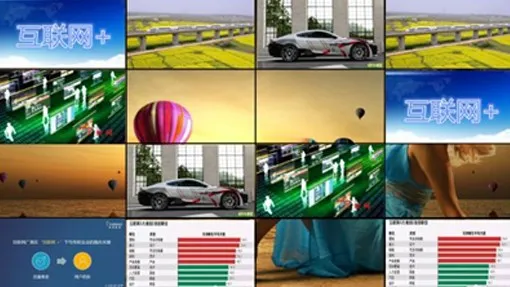
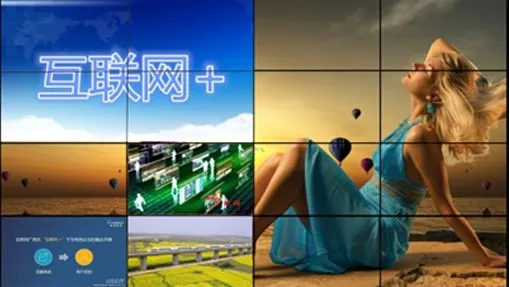
LCD videowall display can display several identical or different dynamic (video) and static (computer data) images at the same time, ensuring diversification of information display.
The implementation model of some functions of the digital signage wall screen system is as follows:


Signal processing system functions
Complete processing of signal sources, including transfer, distribution, switching, frequency doubling, splitting, multi-screen splicing, etc., to achieve the purpose of signal resource sharing, so that the display system can easily obtain any one or more required signals , to meet the needs of various different functions. It is a powerful guarantee for the flexibility and security of the entire multimedia display system.
Various video signals, audio signals and computer signals are shared and connected through AV, VGA, DVI and HDMI matrices, and can be displayed on the digital signage wall and different display terminals respectively.


