



What is sunlight readable digital signage?
Before introducing it, we need to have a basic introduction to brightness. First of all, brightness has a professional evaluation unit. Nit is the basic unit of brightness. The brightness of the screen refers to the amount of light passing through or emitted from a specific area. The lighting amount of a candle is about 1nit. The brightness of most gaming computers and laptops is between 200 and 300nit. This brightness is enough to ensure daily office and gaming needs. The brightness of digital signage used indoors is between 300 and 700nit. If you want to be able to operate under direct sunlight, you need a brightness of more than 1500nit. Only this brightness can ensure the normal presentation of the picture. Next, let's introduce the similarities and differences between sunlight readable digital signage and conventional digital signage.

Differences:
High brightness
The most direct difference from conventional digital signage is the brightness. Unlike conventional digital signage with a brightness below 1000nit, the required brightness of sunlight readable LCD digital signage must be at least 1500 to ensure normal display of content under direct sunlight and ensure visibility to pedestrians.
Anti-reflective coating
In order to further improve readability, sunlight readable outdoor display digital signage is usually equipped with anti-reflective coating on the screen. This coating treatment technology can significantly reduce the reflection of sunlight and reduce glare, allowing viewers to view the content more easily. The application of anti-reflective coating not only improves the visual effect, but also enhances the user's viewing experience.
Design that is more suitable for outdoor scenes
Sunlight readable digital signage LCD screens are significantly more durable than conventional digital signage. The former usually adopts high-strength materials and structural design, with excellent impact resistance and weather resistance, and can withstand wind, rain, dust and extreme temperatures, ensuring long-term stable operation in outdoor environments. In addition, digital signage that can be read in sunlight generally has a higher waterproof and dustproof rating, reduces maintenance frequency, extends service life, and provides better return on investment. Relatively speaking, conventional digital signage is more susceptible to external environmental influences due to material and design limitations, resulting in higher maintenance costs and shorter service life.
Similarities:
Content management system
Like other traditional digital signage, the built-in system of sunlight readable digital signage is generally Android or Windows system for content management, which is very convenient in the update mode.
Display technology
Both digital signage uses modern display technology. Although the brightness and anti-reflection capabilities are different, they are similar in basic display principles. Basically, the three most common display technologies on the market are LCD, LED and OLED. They are all designed to provide clear and bright images and text to ensure the effectiveness of information communication.
Interactive features
Digital signage, whether used indoors or outdoors, can be integrated with interactive features such as touch screen monitors, QR code scanners, and sensors. These features enhance the user experience and enable viewers to actively interact with content, effectively attracting the audience's attention, whether in a retail environment, public transportation station, or exhibition display.
Why use sunlight readable digital signage?
Retail malls
In retail malls, sunlight readable digital signage is widely used for promotional activities and new product displays. Due to its high brightness, customers can still clearly read the advertising content under direct sunlight. This kind of signage can not only attract customers' attention, but also guide them to find specific products or promotional areas, thereby improving the overall shopping experience and sales.


Catering Industry
Many restaurants and cafes set up sunlight-visible digital signs outdoors to display menus, daily specials, and customer reviews. In the sunlight, these signs can effectively attract passers-by and encourage them to enter the restaurant for dinner. This dynamic display method not only enhances the restaurant's brand image, but also increases the customer's store visit rate.
Transportation
At transportation hubs such as airports, train stations and bus stations, sunlight-visible digital signage is used to publish real-time information such as flight information, train schedules and traffic instructions. The high visibility of these signs ensures that passengers can easily obtain the information they need in bright light environments, thereby reducing the risk of missing flights and trains, and improving passenger satisfaction and travel efficiency.
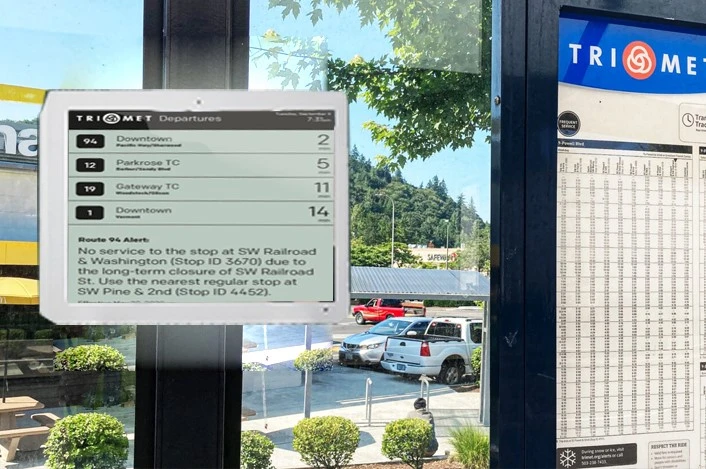

Public places
In public places such as parks, squares and exhibition centers, sunlight-visible digital signage is used to convey event information and public service reminders. These signs can not only clearly display event schedules, but also update information in real time, attracting people to participate in community activities or learn about public services, enhancing the public's sense of participation and community awareness.
Factors to consider when configuring sunlight readable digital signage
After introducing so many advantages and application scenarios of sunlight readable digital signage, I believe you are very interested in deploying digital advertising outdoors. In order to enable you to successfully deploy outdoor digital advertising, let us introduce the factors to consider when configuring digital signage outdoors.
Display brightness
Display brightness is a key factor in configuring digital signage. In order to ensure that it can still be clearly seen under strong sunlight, the brightness of the signage usually needs to reach 1500 nit or higher. High brightness can not only offset the interference of natural light, but also effectively attract the attention of passers-by, thereby increasing the exposure and effectiveness of advertising.
Heat dissipation design
Heat dissipation design is an important consideration for outdoor digital signage. In outdoor environments, high temperatures may affect the normal operation of the device. An effective heat dissipation system (such as built-in fans, heat dissipation holes, etc.) can ensure that the device remains stable at high temperatures, extend its service life, and reduce the failure rate.
Power management
Power management is an important consideration for outdoor digital signage. In outdoor environments, a stable power supply is essential. Choosing an efficient power management system can ensure that the device operates normally in various situations and avoid black screens or failures caused by power problems. In addition, considering outdoor use, the power supply design should also have waterproof and dustproof functions to ensure safety.
Supplier selection
Choosing the right supplier is crucial for the configuration and subsequent maintenance of sunlight visible digital signage. Excellent suppliers can not only provide high-quality equipment, but also provide professional technical support and services. If you don't have a supplier you want to cooperate with, I recommend that you consider Gomany. Gomany is a professional digital signage manufacturer with a 5,000 square meter factory. In terms of production material selection, each digital sign uses an A+ grade LCD panel, which makes the content displayed on the screen more stable and the colors more vivid. In addition, Gomany has very rich experience in digital signage deployment. If you are interested, you can contact us by adding whatsapp +8619925656365 or sending an email to gomany@gomanylcd.com.


